A perfect smile is something many people want; however, crooked or misaligned teeth can easily break that confidence. For many decades, braces have been the ultimate solution; however, not everyone is comfortable with the obvious appearance of wires and brackets. Invisalign has nearly made that history and offers a modern, practical, and “almost” invisible way of achieving straight teeth. If you have been considering orthodontic treatment but want a more subtle option, the first step is to learn what Invisalign is and how it works.
Understanding Invisalign Aligners
Invisalign definitely works as it aligns teeth gently to the desired position. For this, it uses a series of invisible, removable teeth aligners that are tailored uniquely for each individual. Using advanced 3D scanning technology, each aligner is made and manufactured with utmost precision for maximum comfort. They are made of gentle, smooth, 3D-manufactured BPA plastic, which not only provides comfort, but is also “tooth happy” as it is worn with near invisibility.
Invisalign does not attach wires or brackets to your teeth, which makes it different from traditional braces. Rather, Invisalign is quite appealing to both adults and adolescents because it is a means of getting a straighter smile without the focus being on the treatment itself.
Common Dental Issues Invisalign Can Address
Invisalign is often assumed to be only applicable to mild cases, which is not the reality. Rather, it is useful for several frequent dental issues. Crowding, for instance, is a common dental issue that makes cleaning difficult and can cause gum disease. Invisalign will create more space, allowing the teeth to gently shift into their proper positions.
Patients undergoing treatment with Invisalign often experience some closing or elimination of gaps in their smile. Gaps can be corrected with constant pressure from the aligners. Bite issues such as overbites and underbites not only affect a person’s looks but can also significantly interfere with chewing. In most cases, Invisalign will be able to shift the bite into a more favorable position, which is where the teeth fit more comfortably together. All the misaligned teeth, together with crossbites and open bites, can cause unwanted wear and even speech problems, but there is a solution. Aligners can assist in guiding the teeth into more favorable positions. For instance, many patients often ask, can Invisalign correct overbite? and the treatment has shown positive results for a wide range of bite concerns.
How Invisalign Works
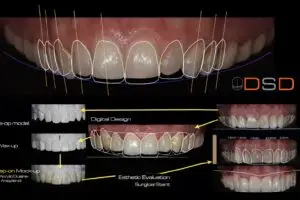
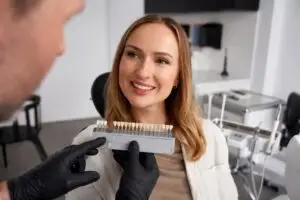
Each process begins with a consultation. The dentist evaluates the patient’s mouth, takes scans, and examines the smile to see if Invisalign is the best fit. The scans also create a 3D model to obtain the mouth’s digital blueprint.
After this, the dentist drafts a treatment blueprint. The software predicts the patient’s teeth transitions on each step and even showcases a smile visualisation before treatment.
As soon as the aligners get ready, the patient begins with the first set. It is recommended to wear each aligner for a week or two before switching to the next one. The aligners are worn for a minimum of 20 hours to a maximum of 22 hours each day, and can be taken out for meals, sips, teeth cleaning, and flossing.
The patient must see the dentist every 6 to 8 weeks to get the next set of aligners and to check if the treatment is on the right track. These sessions are shorter than those for traditional braces. The set of teeth is put in the position determined through treatment with the use of a retainer. This stops the teeth from sliding back to their previous position.

Invisalign vs Braces
When it comes to braces vs Invisalign, what is clear is that braces are affixed to the teeth and highly efficient for complicated movements and different complex issues; however, they are extremely noticeable. They also come with more restrictions regarding how often they need to be adjusted and what foods can be eaten. On the other hand, Invisalign is more comfortable, removable, and much easier to incorporate into one’s daily routine. Though more complicated cases will require the use of braces, Invisalign offers flexibility that many patients seeking orthodontic treatment may prefer.
Benefits of Invisalign
- Close to perfect invisibility means that the wearer can smile without any self-consciousness.
- Aligners are also comfortable to wear thanks to the smooth plastic that is used.
- Unrestricted eating and cleaning of teeth because they are removable.
- Careful planning and management mean patients can expect treatment to be completed on schedule.
- Compared to fixed braces, aligners offer a higher standard of hygiene.
At-Home Care and Maintenance
A visually clean aligner and one genuinely clean are two different things. Aligners need to be brushed every day and rinsed. Make sure the aligners are never cleaned under hot or boiling water. When aligners are not worn, they must be placed in their case. Otherwise, the chances of damage are high. Aligners should be worn after teeth are brushed and flossed in order to not create an environment where food and bacteria can be trapped in the aligners and against the teeth.
Prevention Strategies During Invisalign Treatment
Wearing aligners is one of the most critical steps in the process. It is important to keep aligners in the mouth for most of the day. The longer the aligners are kept in the mouth, the better the results. Keeping to the set timetables is crucial and can not be varied without changing the timetables. Aligners are and should remain worn for the set time. Brushing and flossing after and before meals is the most important strategy in controlling decay and bacteria.
When to Seek Professional Help
Every treatment has its difficulties. Invisalign is no exception. An aligner that is cracked, too loose, or does not fit should be reported to the dentist. Discomfort that lingers after the expected duration also may be of concern. In such cases, for a lack of treatment that meets the patients’ needs, emergency dental treatment service steps in, so necessary care is not postponed, and the treatment progresses.
Final Thoughts
Invisalign shifted orthodontic care by providing patients with a more comfortable and much more discreet alternative to traditional braces. While the range of issues treated using Invisalign includes crowding and gaps in the teeth and issues in bites, the results are long-lasting, predictable, and effective when applied properly.
At Najmi Dental, we understand how important a confident smile is and how discreet treatments like Invisalign can transform not just your teeth but your overall confidence. Our team is experienced in tailoring Invisalign treatments to suit individual needs, ensuring comfort, precision, and predictable results. If you’re considering clear aligners, contact us today to explore whether Invisalign is the right solution for your smile.